
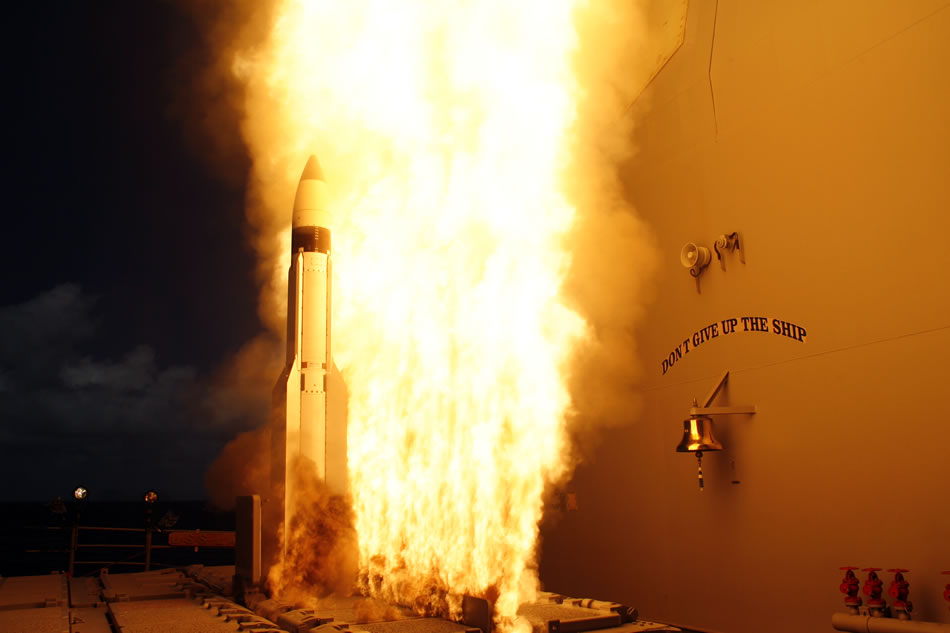
Flightdeck Friday: A BMD Primer
Every now and then I get a chance to reach escape velocity from my day job and do something really fun or different. Recently that entailed presenting a BMD overview to a couple of classes that were part of the Naval War College’s Non-Resident Seminar program (of which YHS is a graduate). And like any good presenter these days, one needs a brief – so, ecce:
Ballistic missile defense_overview_for_nwc_jmo_final-ver1-3_24_jan2012-u
View more presentations from Steeljaw Scribe
…actually, I’d planned on part II of the Atlas story, but got re-tasked this week, so – Plan B(MD).
Oh, and yes, I do my own graphics – here’s a sample from Part II of the Atlas story:

“SJS” – Very nice job on the bmd primer brief.
Well Done SJS! The students are still talking about this presentation…hope it will get wider audiences…
The way things are progressing, much wider than I think either of us thought — and thanks again for the opportunity!
w/r, SJS
Actually, you can shut down solid propellant missiles when you want to.
To do this, you need to have thrust termination ports along the missile that open when commanded to; which cause the pressure inside the propellant chamber to fall below that needed to support continued combustion.
Thrust termination ports were in the original design for the Space Shuttle SRBs, but in an attempt to simplify the design and eliminate excess weight, they were deleted in the 1970s; and this has led to the idea that solid motors can never ever shut off.